The year 2026 is shaping up to be a landmark moment in human spaceflight. From NASA’s Artemis III Moon landing attempt to private companies racing toward Mars, every launch carries new promise. But behind the roar of the rockets, a quieter revolution is underway: artificial intelligence is transforming how we explore the cosmos.
AI now powers everything from autonomous navigation on rovers to real‑time health monitoring of astronauts. The latest launches matter not just because they go farther, but because they think smarter. Whether you are a student, an educator, or a career changer, understanding the role of AI in space is essential. And there’s never been a better time to learn — resources like Artificial Intelligence in 2026: Your Complete Guide to 2026 AI: The Agentic AI Revolution offer a direct path to mastering these skills.
The AI Revolution in Space Missions
Autonomous decision‑making has become the backbone of deep‑space exploration. The latest spacecraft can analyze terrain, avoid hazards, and even adjust scientific experiments without waiting for commands from Earth. This reduces communication delays and allows missions to cover more ground — literally.
In 2026, new lunar rovers will use AI to map resources like water ice. Similarly, Mars helicopters now fly routes optimized by machine learning algorithms. The result? Faster discoveries and safer operations.
AI also powers data analysis. Telescopes like the James Webb Space Telescope generate terabytes of data every day. AI systems sort through that information, flagging anomalies and even spotting new exoplanets. Without artificial intelligence, we would be drowning in numbers while missing the big picture.
Key Launches That Define 2026
Let’s look at the missions that are turning heads this year.
- Artemis III: The first crewed Moon landing since Apollo. AI will assist landing systems and life support.
- Mars Sample Return: A joint NASA‑ESA effort to bring Martian soil back to Earth. Robotic arms, sorting, and containment all rely on AI vision.
- Private Station Debuts: Axiom Space and Blue Origin launch commercial modules. AI manages air quality, power, and crew schedules.
- Deep‑Space Observatories: New telescopes with AI‑driven targeting will scan for habitable worlds.
Each of these launches is a testbed for the AI technologies that will eventually take humans to Mars. If you want to understand what’s coming, start by reading Artificial Intelligence Basics 2026: The Comprehensive Guide to Artificial Intelligence. It breaks down the core concepts without requiring a coding background.
How AI Is Shaping Space Careers
The demand for professionals who understand both space science and AI is skyrocketing. NASA, ESA, and private companies are hiring machine‑learning engineers, data scientists, and autonomous systems specialists. Even traditional roles like mission control now require familiarity with AI‑powered tools.
Key skills for the next era include:
- Python and TensorFlow for building models
- Reinforcement learning for robotic control
- Computer vision for analyzing planetary images
- Ethics and safety frameworks for autonomous systems
Many of these topics are covered in accessible books and courses. For example, Make Money with Artificial Intelligence in 2026: A Practical Guide to Building Income from Scratch offers hands‑on projects that simulate real space‑tech applications. Even if you are new to the field, this guide can help you build a portfolio.
Top AI Books to Prepare for a Space‑Tech Career
Learning AI doesn’t have to be expensive or overwhelming. The following titles are excellent starting points. Each one is linked directly to Amazon for easy purchase.

Artificial Intelligence in 2026 – Rated 5 stars. Covers agentic AI, business transformation, and career roadmaps. Perfect for understanding the big picture.

Artificial Intelligence Basics 2026 – A no‑fluff guide for beginners. Includes practical examples that apply directly to space data analysis.
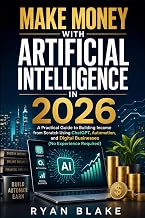
Make Money with Artificial Intelligence in 2026 – Focuses on building automated digital assets. Its step‑by‑step projects mirror the automation used in satellite operations.

Artificial Intelligence: Transforming the World for the Better – Free to read, rated 5 stars. A thoughtful look at ethics and the future of humanity — relevant for anyone working on space policy.

ARTIFICIAL INTELLIGENCE FOR BEGINNERS 2026 – Simple, practical, no coding required. Great for educators who want to introduce AI concepts in the classroom.

A.I. 2026 NOW – Rated 5 stars. Provocative and forward‑looking. Inspires readers to think about how AI will command future space stations.

Top AI Tools in 2026 – Free ebook. Lists the most used AI platforms — many are already employed by space agencies for simulation and planning.

AI Made Easy – Affordable at $2.99. Perfect for high school students exploring a career in space science.

Money Online with Artificial Intelligence in 2026 – Teaches how to write and sell digital content with AI. A creative way to fund your education in space tech.
Why Understanding AI Is Non‑Negotiable for Space Enthusiasts
Space exploration is no longer just about rockets and orbits. It is about intelligent systems that adapt, learn, and make decisions. Whether you follow Space Exploration Updates in 2026: Missions, Milestones, and What Comes Next or dive into How Space Exploration Updates Are Advancing Moon and Mars Missions, the common thread is AI literacy.
For educators, the Space Exploration Updates for Educators: Classroom Ideas and Course Topics page provides ready‑to‑use lesson plans that incorporate AI. Students can explore Space Exploration Updates for Students: Learning the Science Behind New Missions to connect classroom concepts with real‑world launches.
And if you are considering a career, the skills outlined in Space Exploration Updates and Space Careers: Skills Needed for the Next Era will help you stay ahead. The best time to start learning is now — while the rockets are still on the launchpad.
FAQ: AI and Space Exploration in 2026
Q: How is AI used in the latest space launches?
A: AI enables autonomous navigation, real‑time hazard detection, and efficient data processing. For example, lunar landers use computer vision to identify safe touchdown spots, and Mars rovers plan their own paths using reinforcement learning.
Q: Do I need a technical background to learn AI for space?
A: No. Many resources like ARTIFICIAL INTELLIGENCE FOR BEGINNERS 2026 require no coding. You can start with conceptual understanding and gradually move to hands‑on projects.
Q: What are the best free resources to start?
A: Understanding Artificial Intelligence in 2026 and Artificial Intelligence: Transforming the World for the Better are both free and highly rated. They provide a solid foundation.
Q: Will AI replace astronauts?
A: AI handles repetitive tasks and dangerous environments, but human judgment remains critical. The future is collaboration — humans and AI working as a team. This is why learning both space science and AI is a powerful combination.
Q: How can I connect AI learning to space careers?
A: Focus on projects like simulating a Mars rover’s path using Python, or building a model that classifies craters from satellite images. Books like Make Money with Artificial Intelligence in 2026 include such practical exercises.
