The clock is ticking toward 2026, and artificial intelligence is no longer a distant trend — it’s the engine reshaping education, employment, and entire career paths. Whether you’re a student planning your next semester, a job seeker hunting for stable roles, or a professional looking to pivot, understanding Artificial Intelligence in 2026 is your ticket to staying ahead.
The landscape is shifting fast. AI agents, generative tools, and quantum-ready systems are moving out of labs and into everyday workflows. The good news? You don’t need a computer science degree to benefit. Resources like Artificial Intelligence in 2026: Your Complete Guide to 2026 AI: The Agentic AI Revolution in 2026 break down what’s coming and how to prepare.

Let’s explore what this means for three key groups — and how you can turn AI change into opportunity.
AI in 2026: A Quick Snapshot
By 2026, AI will be deeply embedded in daily life and business. Think autonomous agents that handle scheduling, research, and even creative work. Think generative AI that writes code, designs marketing materials, and analyses medical scans. The World Outlook reports for AI in medicines and healthcare (available on Amazon) show that industries are investing heavily — some reports cost over $1,000 because the data is that valuable.
For individuals, the shift means new skills are non-negotiable. But it also means doors open to roles that didn’t exist five years ago. Courses, certifications, and hands-on tools are becoming accessible. The key is knowing where to focus.
What Artificial Intelligence in 2026 Means for Students
Students today face a paradox: AI can automate homework, but it can also supercharge learning. In classrooms, AI tutors and smart study tools are becoming standard. By 2026, expect personalised learning paths that adapt in real time to your strengths and weaknesses.
How Students Can Leverage AI
- Use AI as a study partner. Tools like ChatGPT and specialised platforms can explain complex topics, generate practice questions, and summarise readings.
- Build AI literacy early. Even non-technical majors need to understand prompt engineering, data ethics, and basic automation.
- Choose courses that AI can’t replace. Critical thinking, creativity, and interpersonal skills remain high-value.
For those wanting a structured introduction, Artificial Intelligence Basics 2026: The Comprehensive Guide to Artificial Intelligence (price just $8.99) provides a solid foundation. It’s a cheap investment that pays off in confidence.
Business and education students should also explore Artificial Intelligence in 2026 in Education: Smarter Classrooms, Tutors, and Study Tools for deeper insights on how classrooms are evolving.
What Artificial Intelligence in 2026 Means for Job Seekers
The job market is in transition. Some roles will shrink — data entry, basic customer service, routine analysis. But many new roles are appearing: AI trainer, prompt engineer, AI ethics officer, automation specialist.
The most in-demand skills by 2026 will include:
- AI tool proficiency — knowing how to use platforms like ChatGPT, Midjourney, and automation software.
- Data interpretation — not just number crunching, but understanding what AI outputs mean.
- Adaptability — the ability to learn new tools as they emerge.
Job seekers should focus on roles where AI augments human judgment rather than replaces it. Healthcare, education, creative strategy, and skilled trades are all areas where AI is a helper, not a threat.
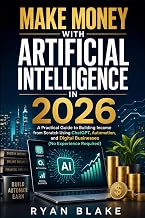
For practical income ideas, check out Make Money with Artificial Intelligence in 2026: A Practical Guide to Building Income from Scratch Using ChatGPT, Automation, and Digital Businesses. It’s a step‑by‑step manual for creating side hustles and full‑time careers with AI.
If you’re a recent grad or mid‑career professional, read Artificial Intelligence in 2026 Career Paths: Skills, Certifications, and Courses That Matter to identify the fastest‑growing roles.
What Artificial Intelligence in 2026 Means for Career Switchers
Making a career change is daunting, but AI is lowering the barriers. Many online courses now use AI to create personalised learning tracks. For example, a marketing professional can upskill into AI‑powered digital marketing in months, not years.
Steps for a Successful Switch
- Identify transferable skills. Your existing experience in project management, communication, or domain expertise is valuable.
- Take an AI‑focused certification. Look for programs that teach practical tools, not just theory.
- Build a portfolio with AI projects. Use free or low‑cost tools to create something tangible — a chatbot, a data dashboard, a content generator.
- Network with AI communities. LinkedIn groups, local meetups, and online forums help you stay current.
Beginners can start with AI Made Easy: Understanding Artificial Intelligence for Beginners in Year 2026 — an accessible ebook for just $2.99 that explains core concepts without jargon.
For those who want to understand the bigger picture, Artificial Intelligence in 2026 Explained: the Biggest Breakthroughs to Watch offers a roadmap of what’s coming.
Generative AI and Intelligent Workflows
One of the hottest areas in 2026 is generative AI. From content creation to software development, these tools automate tasks that used to take hours. The book Generative AI in 2026: From Content Creation to Intelligent Workflows (part of a future‑focused series) dives deep into how professionals can integrate these tools into their daily work.
Career switchers should pay special attention: generative AI skills are highly transferable across industries like marketing, legal, design, and engineering.
Ethics, Privacy, and Accountability
As AI becomes more powerful, ethical concerns grow. Bias in hiring algorithms, privacy violations, and lack of transparency are real issues. Understanding these topics isn’t just for philosophers — it’s a competitive advantage. Employers want people who can navigate the grey areas.
The free ebook Artificial Intelligence: Transforming the World for the Better: The 2026 Complete Guide to AI, Machine Learning, Ethics, and the Future of Humanity (rated 5 stars) is a must‑read for anyone who wants to be a responsible AI practitioner.
For a deeper ethical dive, check out The Ethical Side of Artificial Intelligence in 2026: Bias, Privacy, and Accountability.
Passive Income and Automation
Yes, you can earn money while you sleep — if you leverage AI correctly. Books like Passive Income with Artificial Intelligence in 2026 (free on Kindle) and Money Online with Artificial Intelligence in 2026 (also highly rated) show you how to build automated digital assets.
These aren’t get‑rich‑quick schemes. They’re practical frameworks for creating AI‑powered content, services, or products that run on autopilot. For career switchers who need income while retraining, these strategies can provide a safety net.
How Online Courses Fit In
BudgetCourses.net exists to help you find the right training without breaking the bank. Whether you want a free introduction, a low‑cost ebook, or a comprehensive certification, the AI field offers plenty of affordable options.
Key areas to study in 2026:
- AI literacy for all fields
- Prompt engineering
- Data analysis and visualisation
- AI ethics and governance
- Automation and workflow design
The article How Artificial Intelligence in 2026 Is Changing Online Courses and Skill Development? will give you a clearer picture of how learning itself is being transformed.
Frequently Asked Questions
Does Artificial Intelligence in 2026 require coding skills?
No. Many tools are no‑code or low‑code. You can use AI for writing, design, and analysis without writing a single line of code. However, understanding basic logic helps.
Which industries will be most affected?
Healthcare, finance, education, marketing, and manufacturing will see the biggest changes. But every industry will feel some impact.
How can I start learning AI on a budget?
Start with free resources like Understanding Artificial Intelligence in 2026 or Top AI Tools in 2026 – Beginner’s Guide. Then invest in a practical guide like Artificial Intelligence for Beginners 2026 ($7.99).
Will AI replace all jobs?
No. AI will automate tasks, not entire roles — especially jobs requiring empathy, creativity, and complex decision‑making.
What’s the best certification for 2026?
It depends on your field. For general AI, consider certifications from Google, Microsoft, or IBM. For niche areas like AI in healthcare, look for specialised courses from medical institutions.
Final Thoughts
Artificial Intelligence in 2026 isn’t something to fear — it’s something to embrace. Students can learn faster, job seekers can find new roles, and career switchers can transition with less friction. The resources are plentiful, many are affordable, and the time to start is now.
Take action today: pick up a guide like A.I. 2026 NOW: A Declaration of Command in the Age of Artificial Intelligence (rated 5 stars), explore the courses on BudgetCourses.net, and begin building the skills that will define the next decade.
The future is already here. Make sure you’re part of it.
