The AI job market in 2026 is red-hot. Agentic AI, generative workflows, and ethical governance are creating roles that didn’t exist five years ago. Whether you're a student, a career switcher, or a seasoned professional, the right skills and credentials can fast-track your path. This guide breaks down the career paths, must-have skills, top certifications, and best courses to help you build a future-proof AI career.
Already eyeing a comprehensive resource? The Artificial Intelligence in 2026: Your Complete Guide (rated 5 stars) covers agentic AI, ethics, and career roadmaps in one place.

The AI Career Landscape in 2026
Artificial intelligence in 2026 is no longer just about chatbots. Agentic AI – systems that act autonomously – is transforming industries from healthcare to finance. According to recent reports, AI-related job postings have grown by over 40% year-over-year. The most in-demand roles include:
- AI/ML Engineer – build and deploy models at scale
- AI Product Manager – bridge technical teams and business goals
- AI Ethics & Compliance Officer – ensure fairness, privacy, and accountability
- MLOps Specialist – manage the lifecycle of production AI systems
- Prompt Engineer – optimize interactions with large language models
- Data Scientist – extract insights and train predictive models
For a deeper look at which roles will grow fastest, read our analysis: How Artificial Intelligence in 2026 Is Changing Online Courses and Skill Development?.
Must-Have Skills for AI Professionals in 2026
Your skill stack must combine technical depth with real-world application. Here are the core competencies that top employers will reward:
Technical Skills
- Machine Learning & Deep Learning – supervised, unsupervised, reinforcement learning
- Natural Language Processing (NLP) – transformers, BERT, GPT architecture
- Computer Vision – CNNs, object detection, image generation
- Reinforcement Learning – agent-based systems, reward modeling
- MLOps & Model Deployment – Docker, Kubernetes, CI/CD for ML
- Data Engineering – SQL, Spark, data pipelines
- AI Ethics & Bias Mitigation – fairness metrics, explainability
Soft Skills
- Critical thinking – evaluate model outputs and edge cases
- Communication – translate technical insights to stakeholders
- Adaptability – AI evolves fast; continuous learning is key
Pro tip: Don’t overlook AI ethics. With regulations tightening around accountability, professionals who understand bias and privacy will be in high demand. Check out our guide: The Ethical Side of Artificial Intelligence in 2026: Bias, Privacy, and Accountability.
Top Certifications That Boost Your AI Career in 2026
Certifications validate your expertise and signal commitment to employers. Here are the most recognized credentials for 2026:
| Certification | Provider | Focus Area | Approx. Cost |
|---|---|---|---|
| AWS Certified AI Practitioner | Amazon Web Services | Cloud-based AI/ML | $300 |
| Google Professional Machine Learning Engineer | Google Cloud | MLOps & AutoML | $200 |
| Microsoft Certified: Azure AI Engineer Associate | Microsoft | Azure cognitive services | $165 |
| Certified Artificial Intelligence Scientist (CAIS) | USAII | Comprehensive AI | $500 |
| TensorFlow Developer Certificate | Deep learning | $70 |
Why these matter: Cloud platforms dominate AI deployment. Cloud-specific certs prove you can operationalize models at scale.
For beginners, the Artificial Intelligence Basics 2026: The Comprehensive Guide ($8.99) is a low-cost starting point.

Best Courses to Build AI Expertise in 2026
Formal education is shifting. Short, focused courses from reputable platforms are often more effective than traditional degrees. Here’s what to consider:
Recommended Learning Platforms
- Coursera – “AI For Everyone” (Andrew Ng), “Deep Learning Specialization”
- edX – “Professional Certificate in Machine Learning & AI” (MIT, Columbia)
- Udacity – “AI Programming with Python” Nanodegree
- Fast.ai – practical deep learning without heavy math prerequisites
- BudgetCourses.net – affordable micro-courses covering specific AI tools
Course Selection Tips
- Look for hands-on projects – real data, real problems
- Prioritize courses that teach MLOps – deploying models is more valuable than just training them
- Check instructor credentials and student reviews
For a high-level overview of where learning is heading, explore Artificial Intelligence in 2026 for Beginners: a Simple Guide to the New AI Landscape.
How to Choose the Right Learning Path
Your choice depends on your current background and career goal:
| If you are… | Recommended focus |
|---|---|
| A complete beginner | Start with foundational AI + Python → then specialized courses |
| A software engineer | Deep learning, MLOps, cloud certifications |
| A business professional | AI product management, ethics, prompt engineering |
| A student | Build a portfolio with projects; consider a certification |
| A career switcher | Combine a certification with a practical project and networking |
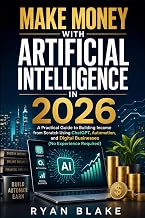
Budget tip: Many high-quality courses are free or low-cost. The Make Money with Artificial Intelligence in 2026 ($16.97) book shows how to generate income using AI automation – a great side project while you learn.
FAQ: Artificial Intelligence Career Paths in 2026
Q1: Do I need a degree to work in AI?
No. Many employers value skills and certifications over formal degrees. However, a degree in computer science, mathematics, or a related field can help.
Q2: Which AI career pays the most in 2026?
AI/ML Engineers and AI Product Managers top the list, with salaries often exceeding $150,000 per year in the US.
Q3: How long does it take to transition into an AI career?
With focused study (20 hours/week), you can gain foundational skills in 3–6 months. A full specialization with projects may take 9–12 months.
Q4: Will AI replace jobs?
AI will automate routine tasks, not entire roles. Professionals who combine domain expertise with AI skills will be most valuable.
Q5: What’s the best certification for a beginner?
The AWS Certified AI Practitioner or Google’s Professional ML Engineer are beginner-friendly and widely recognized.
Your Next Step
The AI career landscape in 2026 rewards action. Start with a free or low-cost course to test your interest, then invest in a certification or project-based learning. Combine skills with ethics and cloud deployment know-how – and you’ll be ready for the roles that are growing fastest.
For a complete overview of trends shaping the field, read Artificial Intelligence in 2026: 12 Trends Reshaping Jobs, Learning, and Daily Life. And if you’re a business owner wanting to apply AI, don’t miss Artificial Intelligence in 2026 for Business Owners: Practical Uses, Risks, and ROI.
Your AI career starts today. Which skill will you master first?
