

Visual Recipes for Life Skills Cooking, Built for Teens and Adults
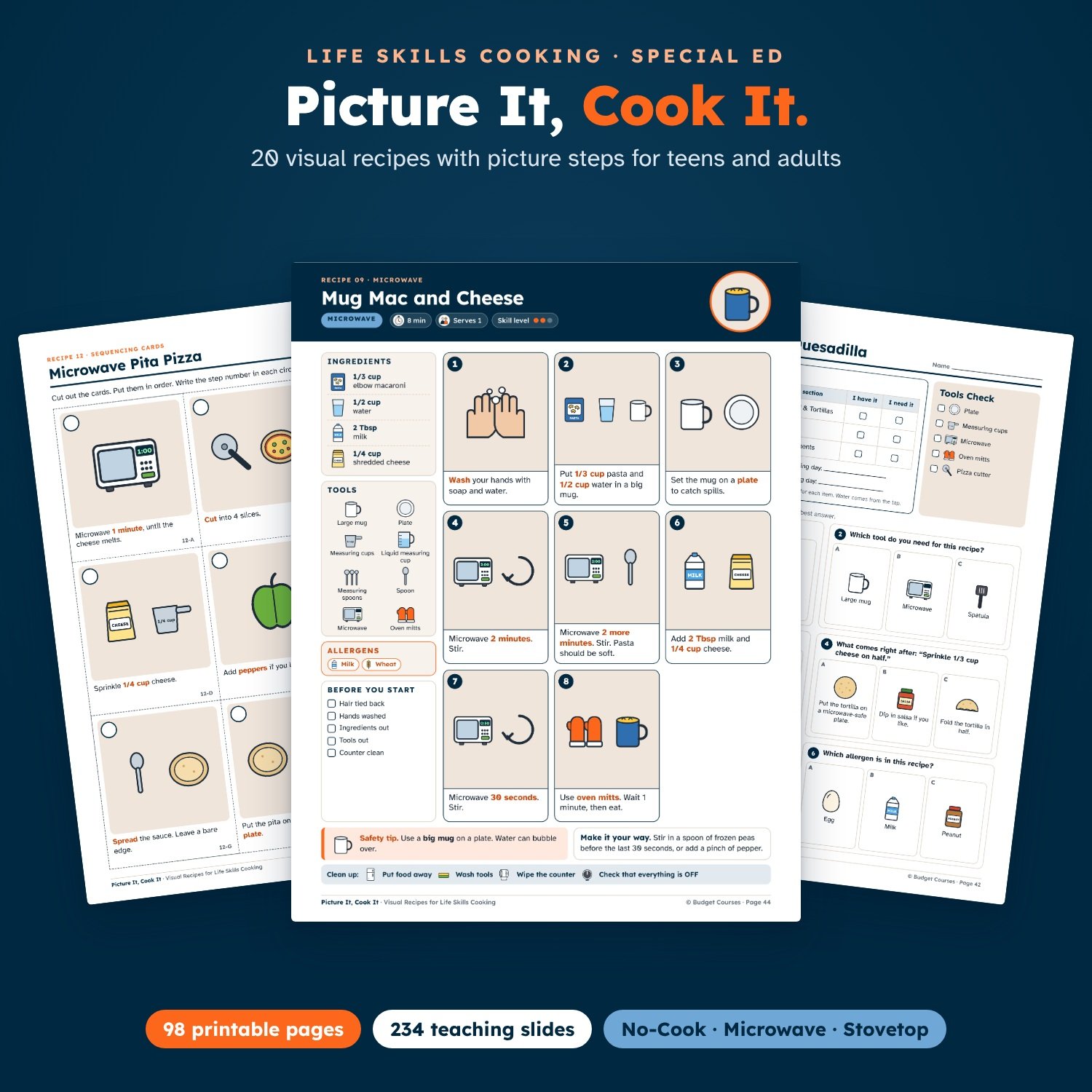
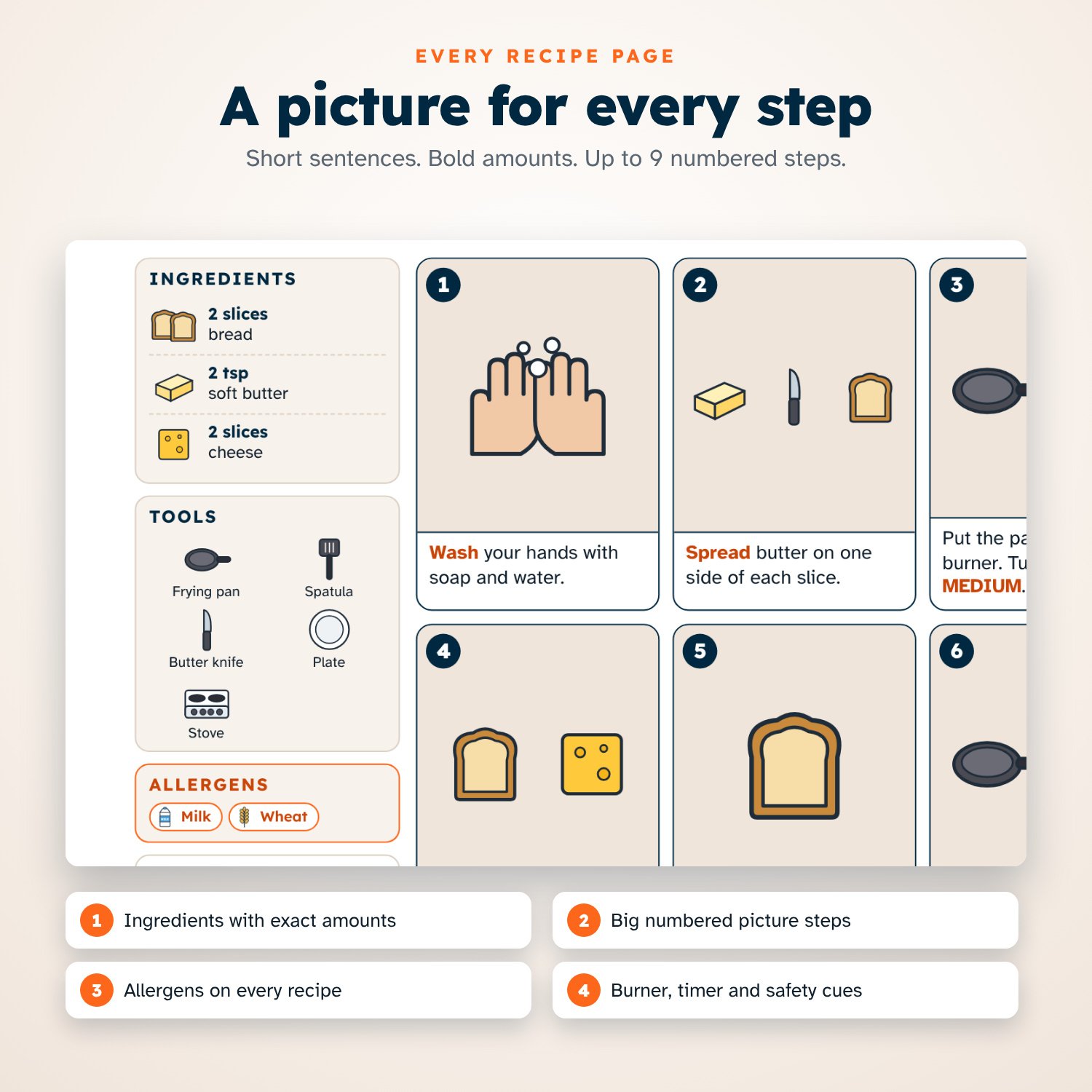
Picture It, Cook It is a set of visual recipes for life skills cooking in special education, transition and Adult Education classrooms. It holds 20 original lunch and snack recipes, and every step has its own picture, a step number and a short sentence with the action and the amount in bold. Students read “Microwave 45 seconds” next to a microwave showing 0:45, so they can follow the recipe with less talk from you and more independence.
The pictures are flat, clean icons drawn for this product, with no cartoon faces. A 17-year-old or a 40-year-old can use these pages without feeling talked down to.
What is inside the visual recipe book
The 98-page PDF is organized so you can teach the basics first, then cook, then track progress.
20 picture recipes in 3 methods
- No-cook (7): Turkey and Cheese Roll-Ups, Peanut Butter Banana Wrap, Berry Yogurt Parfait, Hummus Veggie Snack Box, Tuna Salad Crackers, Overnight Oats Jar, Apple, Cheese and Cracker Plate.
- Microwave (7): Cheese Quesadilla, Mug Mac and Cheese, Scrambled Egg Mug, Baked Potato, Pita Pizza, Banana Cinnamon Oatmeal, Rice and Veggie Bowl.
- Stovetop (6): Grilled Cheese Sandwich, Pasta with Red Sauce, Heat-and-Eat Soup, Veggie Ramen Bowl, Simple French Toast, Black Bean Soft Tacos.
Three pages for every recipe
- Visual recipe page: ingredients with exact amounts, a picture of every tool, allergen chips, a Before You Start checklist, up to 9 numbered picture steps, a safety tip, swap ideas and the same clean-up routine each time.
- Get Ready page: a visual shopping list with store sections and “I have it / I need it” boxes, a tools check, and 6 picture-supported recipe comprehension questions.
- Sequencing cards: the steps printed out of order with letter codes, so students cut, sort and number them. A 9-space sequencing mat matches the card size.
Kitchen foundations
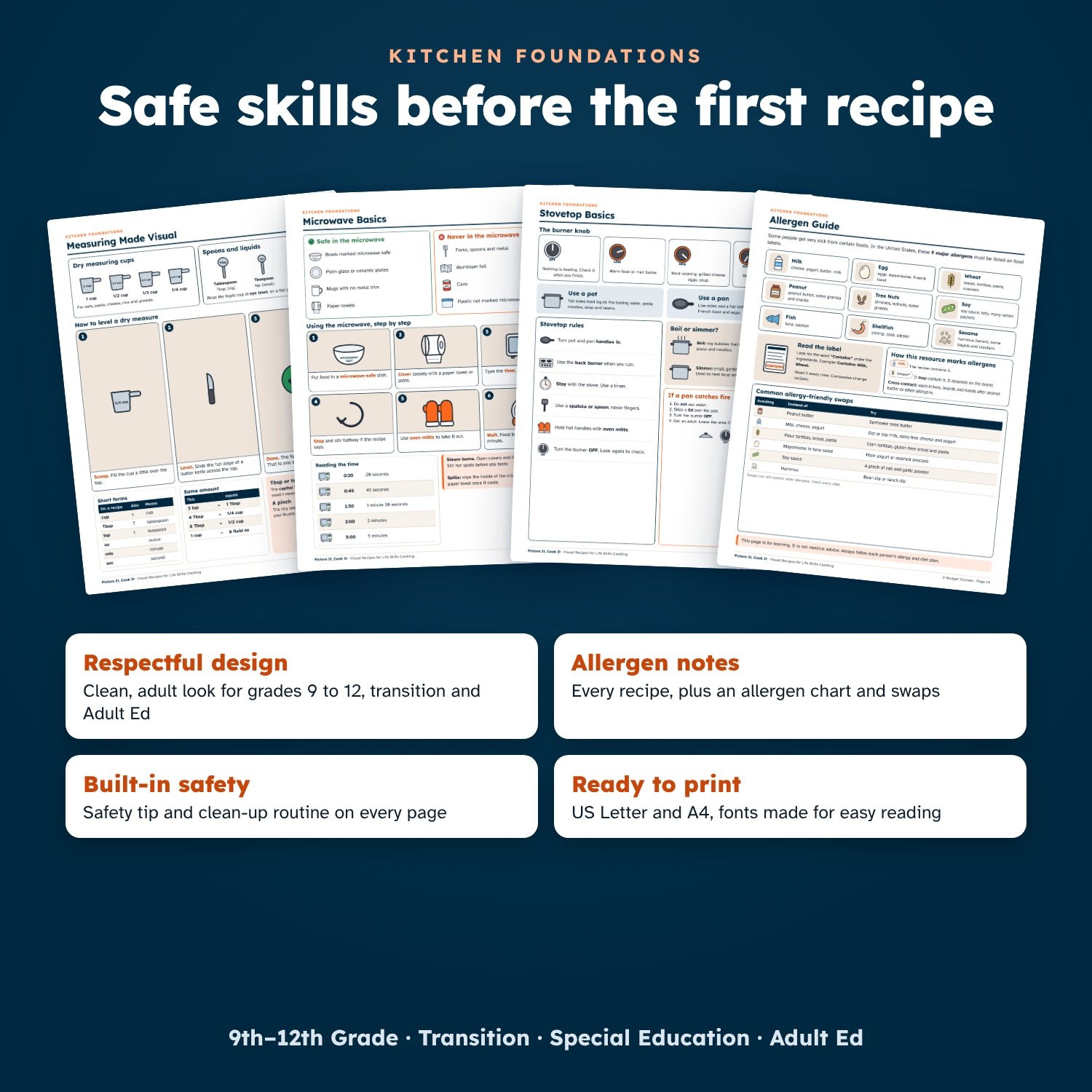
Before the first recipe, teach 12 kitchen safety rules, handwashing in 6 steps, food safety (clean, separate, cook, chill, plus fridge or pantry), a 24-tool kitchen glossary, measuring visuals for cups and spoons, microwave basics, stovetop basics with the burner knob from OFF to HIGH, an allergen guide with the 9 major allergens and common swaps, and 16 cooking word cards such as crack, spread, drain and flip.
Practice, data and planning
- 3 worksheets: Name That Tool, Measure It Right, and Safe or Not Safe
- Cooking Skills Checklist with 33 skills and prompt-level columns
- Task analysis data sheet, recipe log, After I Cook reflection page
- Blank visual recipe and shopping list templates
- Cooking at Home page for families and support staff, plus a Kitchen Skills Certificate
- Answer keys for all 120 recipe questions, every card order and all 3 worksheets
Step-by-step slides and editable forms
The PowerPoint file has 234 slides: a title slide, a What You Need slide, one large slide per step and a clean-up slide for each recipe. Put it on the board while students cook and click forward only when a step is done. A recipe menu slide jumps to any recipe, and every word can be edited. The Word file has editable forms: a blank recipe template, a shopping list, a task analysis sheet, the skills checklist and the home page.
Who these visual recipes are for
- Life skills and special education teachers in grades 9 to 12
- Transition programs for ages 18 to 22 and Adult Education classes
- Day programs, group homes, job coaches and families teaching independent living
- Speech and occupational therapists working on sequencing, vocabulary and following directions
How it works
- Plan: preview the picture steps, teach new words and fill in the shopping list.
- Cook: follow the visual recipe or the slides one step at a time and record prompts on the data sheet.
- Review: sequence the cards, answer the 6 questions and complete the reflection.
Start with level 1 no-cook recipes, then move to the microwave and the stovetop. Each recipe shows a skill level from 1 to 3, the time and the number of servings, and the index page lists all 20 recipes with an allergen chart on a single page.
Allergen notes on every recipe
Each recipe marks the common allergens it contains, such as milk, egg, wheat, peanut, fish or sesame. A dashed chip shows ingredients that may contain an allergen depending on the brand, like granola or canned soup. Every recipe also has a “Make it your way” box with swaps, such as sunflower seed butter in place of peanut butter.
File formats and software
- PDF in US Letter and A4 (98 pages each) with clickable contents and bookmarks. Opens in any PDF reader.
- PowerPoint PPTX (234 slides). Tested in LibreOffice Impress and built for Microsoft PowerPoint.
- Word DOCX editable forms and a DOCX user guide. Tested in LibreOffice Writer and built for Microsoft Word.
- Fonts in the PDF are Lexend and Atkinson Hyperlegible, both designed for easy reading.
This is a digital download. You get the files right after checkout, with unlimited downloads. Nothing is shipped.
Real classroom uses
- A weekly cooking lab in a high school life skills room, with one recipe each week across a semester
- A transition program preparing young adults to make their own lunch before work
- Community-based instruction: students use the visual shopping list at the grocery store, then cook at school
- Home practice, with the Cooking at Home page sent to families or group home staff
Frequently asked questions
Are the visual recipes good for older students?
Yes. The design and wording are made for teens and adults in grades 9 to 12, transition and Adult Ed.
Do I need a stove?
No. 14 of the 20 recipes are no-cook or microwave only. The 6 stovetop recipes need a single burner.
Are the recipes original?
Yes. All recipes, pictures and text were written and drawn for this product.
Can I edit the recipes?
The slides and the Word forms are fully editable. The PDF pages are print-ready and not editable.
Does it include answer keys?
Yes, for all 120 recipe questions, all 20 sets of sequencing cards and the 3 worksheets.
Does it include prices or money math?
No. This resource focuses on following recipes and cooking steps. The shopping lists track items and amounts only.
Can I share it with other teachers?
One purchase covers one teacher or one household. Please buy a license for each teacher.
For supervised teaching. Check each learner’s allergy and diet plan and read the labels on the brands you buy.


Reviews
There are no reviews yet.